The trailer for GTA VI, the latest installment in the acclaimed Grand Theft Auto video game series, introduces Lucía Caminos, a Latina woman, as one of the protagonists alongside her partner, Jason Duval. Criticism from some fans of the franchise quickly surfaced online. Beyond comments about Caminos’s appearance, some users have labelled her “too dominant” because of her personality and questioned her weapons skills, which they deem “unrealistic for a woman,” even comparing them to those of a U.S. Marine.
These reactions highlight the sexist attitudes that persist within parts of the gaming community. Resistance to women playing prominent roles, however, is not unique to GTA VI. Similar backlash has accompanied other games, such as World of Warcraft, The Last of Us and Horizon.
Content creator and streamer Enya Aguado Martín, 31, better known as EnyusTV on Twitch, where she broadcasts gaming content, first got into video games at the age of five, as soon as she had the “physical ability to hold a controller.” It was only two years ago, however, that she began playing GTA V’s online roleplay mode.
She went viral thanks to a character she created, La Chusti, a former drug addict who caught the attention of internet users for breaking with the beauty standards typically found in the game. “In roleplay, bodies tend to be highly stereotyped: big breasts, big curves, a tiny waist. The typical normative body,” Aguado explains.
Chusti, by contrast, is a “small woman with a petite frame. She’s very realistic: very long, thin arms, very large hands, a noticeably misshapen face and a lazy eye. Her face and body show the consequences of what she’s lived through,” says the content creator.
Aguado says the difference between playing a female character and a male one is striking. When she logs into a game as La Chusti, it is common for other players to call her “ugly” or tell her that she “would look better with makeup.” The reactions change, however, when she uses a male character she also created, whom she describes as looking like “a complete loser.”
“They don’t make those comments with the male character,” she says. “They make other kinds of remarks, like ‘Virgin, loser,’ but no one’s called him ugly. There are no allusions to his appearance, not one.”
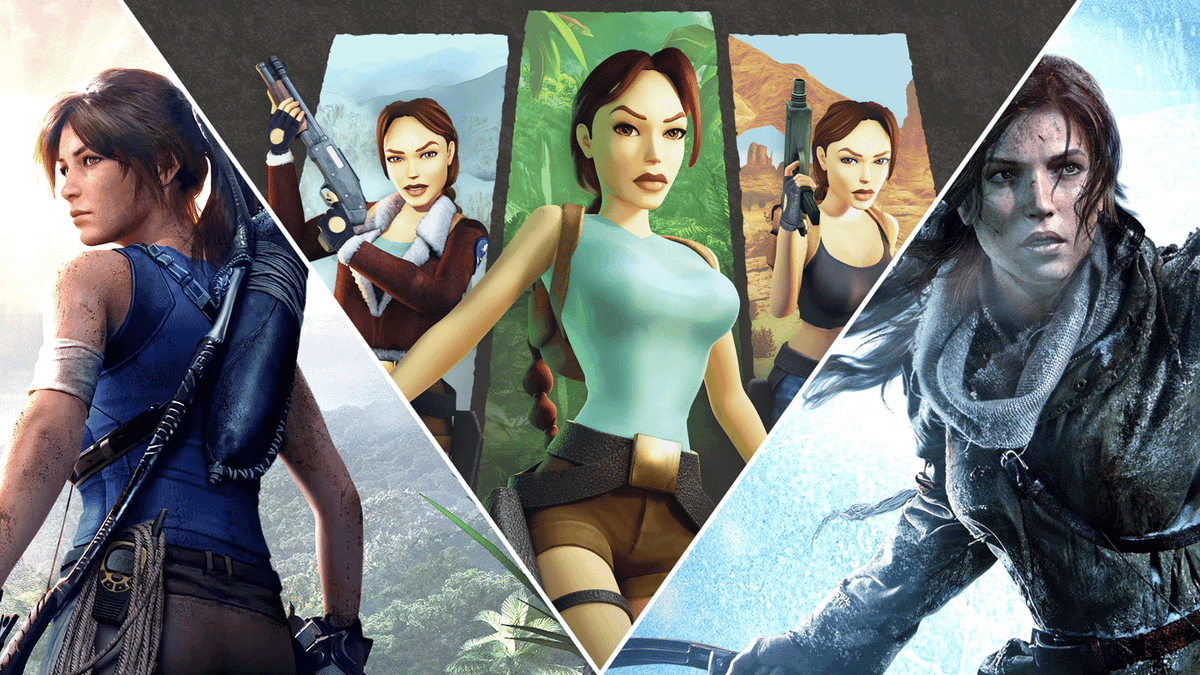
What Aguado says about La Chusti is just one more example of the hostility that some members of the gaming community display toward certain female characters. Not all female protagonists, however, have provoked the same reaction. Lara Croft, from the Tomb Raider series, became one of the most iconic women in video games, but she also embodied a very specific beauty ideal: “pretty, very voluptuous, large-breasted and highly sexualized,” in Aguado’s words.
The streamer recalls that boys also enjoyed playing as Lara Croft, but argues that they did so “with different connotations.” By contrast, she says that complaints tend to emerge when contemporary games feature women who “deviate too far from that ideal.”
Ellie and Abby, the protagonists of The Last of Us, as well as Aloy, from Horizon, have likewise faced criticism over their appearance. Aguado recalls comments aimed at Abby such as: “She’s got bigger arms than you. She looks like a man,” while some players went so far as to describe Aloy as “ugly.”
Gisela Vaquero, a video game developer at Jellyworld Interactive and co-founder of Women in Games, an organization established in 2017 to raise the profile of women in the industry, sums up in four words the stereotypes that have historically shaped the portrayal of women in video games: “secondary, rescued, submissive and sexualized.”
This depiction mirrors the patterns identified in a study by Spain’s Institute for Women, published in February 2025, which cites research on the hypersexualization of female characters, their portrayal as perpetual adolescents and the tendency for their dialogue to carry a greater emotional burden than that of male characters.