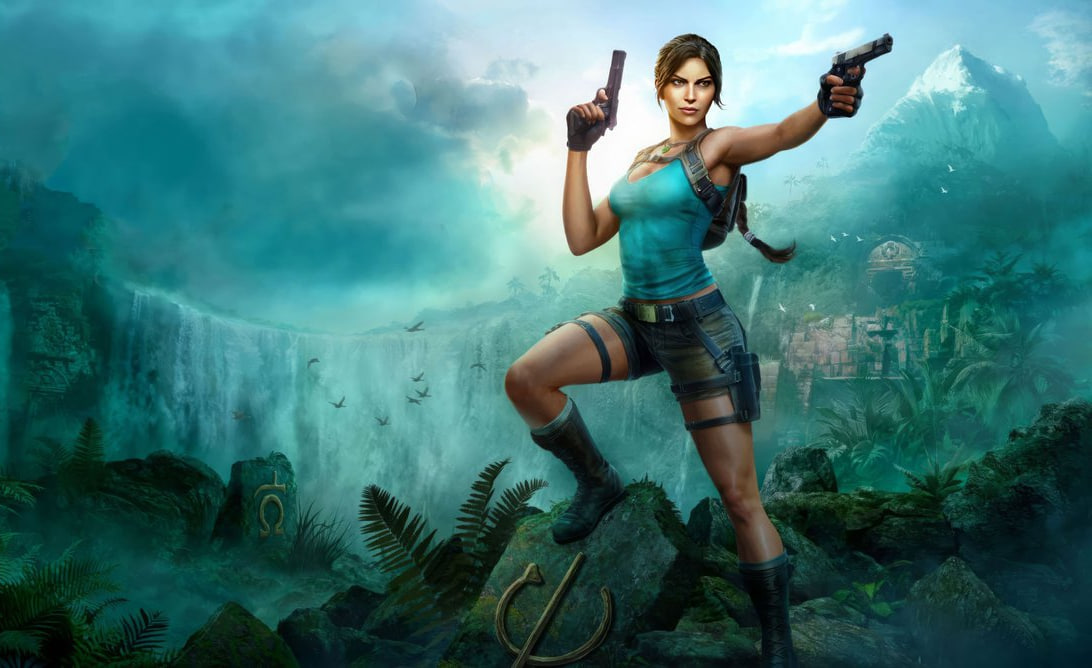
In the original Tomb Raider, Peru’s Lost Valley was a chain of separate rooms, and Lara Croft crossed them on tank controls, one grid square at a time. Tomb Raider: Legacy of Atlantis rebuilds that stretch as one interconnected space, redesigns its puzzles from scratch and gives Lara a wrist-mounted grappling hook that pulls gears and levers from across the room. The remake arrives early next year, three decades after the original first reached PlayStation and Sega Saturn owners.
| Crystal Dynamics is co-developing the game with Flying Wild Hog, the Polish studio behind the Shadow Warrior reboots and Evil West, and Amazon Games is publishing it. It runs on Unreal Engine 5 and is coming to PlayStation 5, Xbox Series X | S, PC through Steam and Nintendo Switch 2. It is the second official remake of Lara’s first adventure, after Tomb Raider: Anniversary in 2007. Amazon revealed it at The Game Awards in December 2025, alongside Tomb Raider: Catalyst, a separate new entry planned for 2027. |
The remake was first promised for 2026. During Sony’s State of Play on June 2, 2026, the release date trailer above confirmed the move to February 2027 and added the Switch 2 version. The months before had been rough for the studio: Crystal Dynamics went through four rounds of layoffs between March 2025 and March 2026, and Phil Rogers, chief executive of its owner Embracer Group, said Amazon scaling back its own game development had affected the project.
The story follows the 1996 outline. Lara hunts for the Scion, an artifact from Atlantis, and tries to keep its power out of the wrong hands. Adrienne Wilkinson voices Natla, the villain of the original, and Bradley Snedeker plays Larson Conway, Natla’s mercenary, through performance capture; an overview trailer introducing Larson went out on October 5. Lara herself has a new voice. Alix Wilton Regan takes over from Camilla Luddington, who played her in the three previous games.
Most of the changes sit in how Lara moves and fights. The grappling hook works for swinging between anchor points, rappelling down walls and dragging puzzle pieces into reach. A new archaeological scanner highlights objects she can interact with and adds historical notes on statues and relics, and players who want fewer hints can switch it off. In combat, Lara fills a Focus meter that slows the action for precise shots with her dual pistols or shotgun. Medpacks are gone, replaced by crafting: local resources become health potions or an Explorer’s Stew that briefly cuts the damage traps deal.
Puzzle difficulty and combat difficulty are set independently, so a player can keep the brain-teasers hard and make the gunfights easy, or the reverse. The original’s instant deaths have been softened too. “Part of properly reinventing a game is adapting it to the tastes of modern players,” game director Will Kersake said. Tank controls are not coming back.
The studio has also had to answer questions about generative AI. The game’s Steam disclosure says AI was used for “some early exploration and temporary development content” and that “any AI-assisted assets were either replaced or refined by humans.” Experience director Jeff Adams said Lara is “100% human-crafted.”
The previews so far come from a pre-alpha build, and the writers flagged rough edges, from awkward jumps to areas that still need polish. Four months out, the open question is whether a remake built on the 1996 maps can feel like that game without its stiffness. On the evidence so far, Crystal Dynamics is keeping the maps and the traps and changing nearly everything about how Lara gets past them.