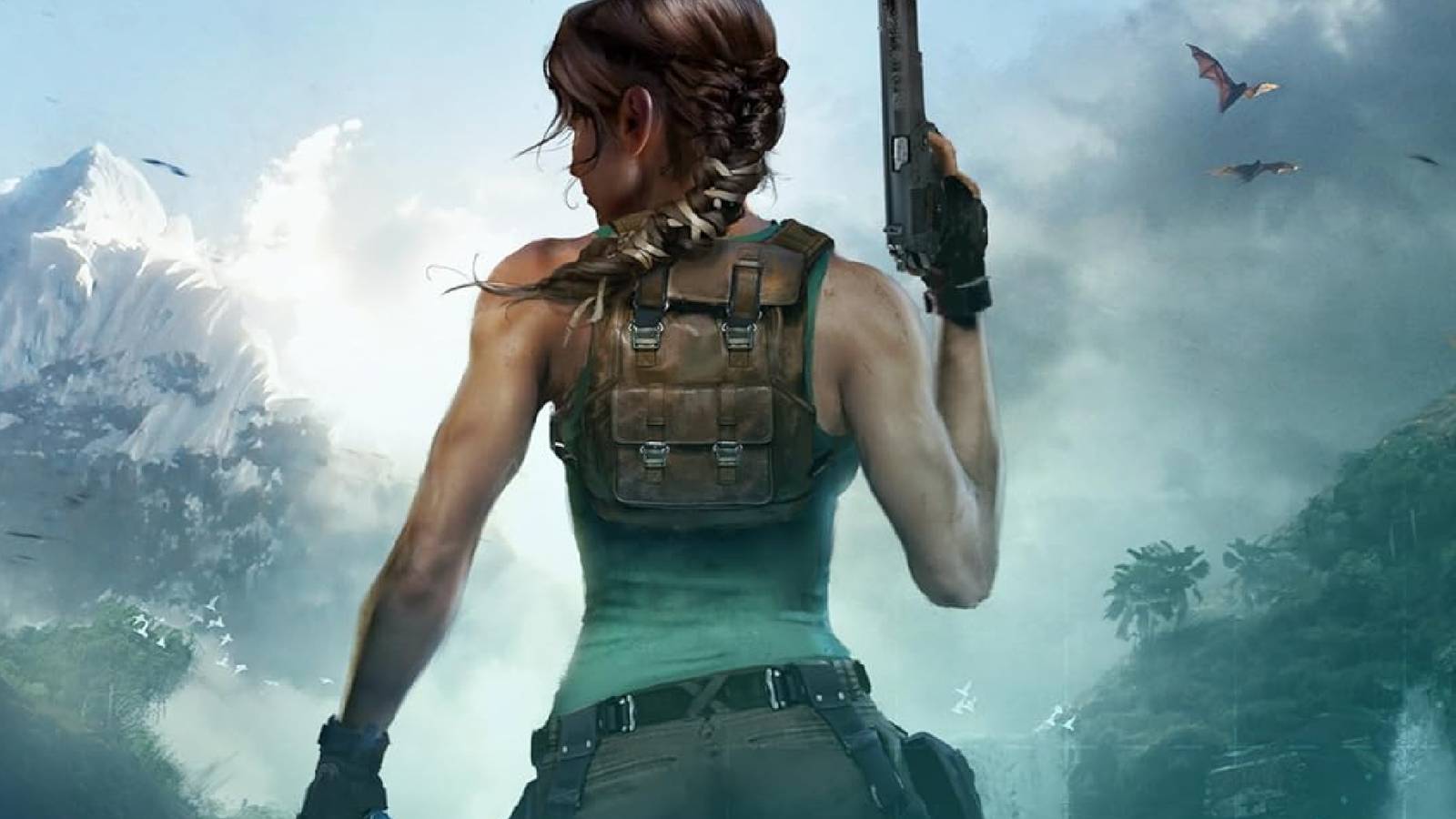
Crystal Dynamics and Flying Wild Hog have released a fifth developer diary for Tomb Raider: Legacy of Atlantis, this time pulling back the curtain on how the studios rebuilt the puzzle and trap design from Lara Croft’s original 1996 adventure. Published by Amazon Game Studios, the episode explains how level design, environmental storytelling and hazard placement were developed together rather than bolted on afterwards.
Amazon Games and Crystal Dynamics have released the fifth developer diary for Tomb Raider: Legacy of Atlantis, detailing how the teams at Crystal Dynamics and Flying Wild Hog updated the puzzle design from Lara Croft’s original 1996 adventure. The episode opens by asking, “What kind of challenge keeps you thinking, long after you’ve solved it?” before the developers walk through how they revisited the logic and structure behind the original game’s puzzles ahead of rebuilding them with modern mechanics and more detailed environments.
The episode follows a run of earlier instalments in the same behind-the-scenes series, which have already covered the reimagined Peru section, the creatures Lara encounters, her redesigned movement and traversal, and the character’s overall redesign. The developers said the new puzzles were designed to preserve the deliberate problem-solving that defined the first Tomb Raider, even while reworking familiar ideas from the original release.
A companion behind-the-scenes video shared separately by Flying Wild Hog goes further into the mechanical thinking behind the traps themselves. Flying Wild Hog explained that the puzzles are rooted in authentic ancient technologies. According to the studio, Lara Croft’s trials are designed to feel logical, so players can understand the solution before they execute it.
That means the specific mechanisms change depending on where Lara is standing. Players will have to move large pieces, adjust water flows, redirect light beams, and decode symbols as they progress through the game. Lara also receives a wrist gadget and an archaeological scanner, both meant to help her analyse the environment and find hidden clues.
Crucially, the difficulty curve is tied to geography as much as level progression. The studio added that traps will become deadlier, more precise, and more technological the farther players go. In practice, a Peruvian counterweight puzzle should feel mechanically distinct from an Egyptian or Atlantean one, even if the underlying design grammar — cause, effect, and a visible solution — stays consistent.
Sony’s own hands-on coverage from Summer Game Fest 2026 offers a concrete example of that philosophy in action. The preview took players to the Lost Valley area in Peru, where they were tasked with solving a new version of Tomb Raider’s iconic cog puzzle, in which two cogs are needed to reconnect a mechanism that can stop the flow of a nearby waterfall.
Reporting on the same Peru levels described how the team is folding real cultural artefacts into gameplay itself. The team integrated cultural artefacts directly into gameplay mechanics, including a new puzzle featuring Khipus, the traditional Incan knot-tying language. The wider goal is to honour nostalgia while utilising modern technology to expand world-building, anchoring the levels in historical accuracy and structural scale.
It’s that tension — what a region’s real-world history and available materials would plausibly allow versus what makes for a satisfying modern puzzle — that the fifth dev diary and the Flying Wild Hog video are ultimately both circling. Rather than dressing generic switch-and-lever puzzles in temple skins, the teams say they started from the technology a given civilisation was likely to have used, then built the trap or mechanism around it.
The puzzle-and-trap diary was announced ahead of time by Tomb Raider Chronicles, which confirmed it as the fifth entry in Amazon Game Studios’ ongoing mini-documentary series.