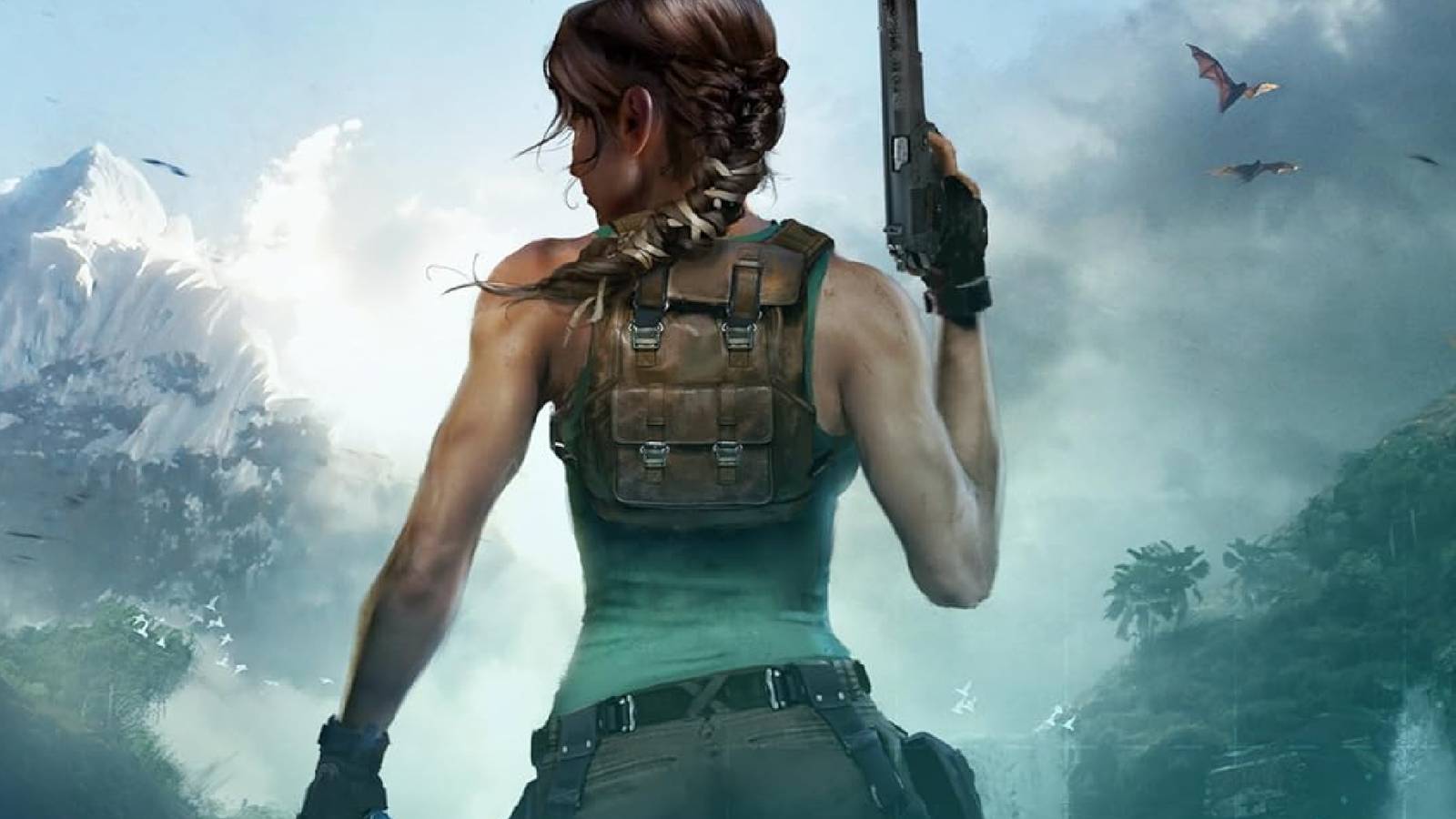
The future of Tomb Raider begins with a return to its past. Crystal Dynamics announced a brand new Tomb Raider in 2022 alongside a publishing deal with Amazon, promising a new single-player narrative-driven title built in Unreal Engine 5. This was subsequently revealed to be Tomb Raider Catalyst, a game set at the furthest point in the franchise timeline that attempts to unify all of the different versions of Tomb Raider we’ve had so far. That’s currently set to release in 2027.
But what no one saw coming was a remake of the original 1996 Tomb Raider, titled Legacy of Atlantis, which was announced alongside Catalyst at The Game Awards 2025. The project is a collaboration between Crystal Dynamics and the Polish developer Flying Wild Hog, best known for its work on the Shadow Warrior series. It’s slated for a February 2027 launch, following a recent delay.
It’s the second time that the original Tomb Raider has been remade: four years after Crystal Dynamics was given the keys to the franchise by Eidos, the company released Tomb Raider: Anniversary, developed with Buzz Monkey Software, in 2007.
“We are coming up on the 30th anniversary of Lara Croft,” says Jeff Adams, the game’s experience director. “We felt that there’s no better time for us to actually bring this story, this adventure back into that mainstream consciousness than right now. It’s also an opportunity; this is a fantastic jumping-on point for anyone who maybe has not experienced one of the past term later games, for them to come in and say that this is a great thing to play as it is the foundation for a lot more to come ahead.”
While much prettier than its forebears, graphical fidelity hasn’t purely been the focus for the Crystal Dynamics and Flying Wild Hog teams. The duo has tried to recreate the feeling of playing the game for the first time, even though almost 30 years and five console generations separate the two experiences.
“We are trying to create similar memories that people had when they were playing the original Tomb Raider, but for the new people who haven’t played that, they can just come in, they enjoy the experience and create the memories on their own,” Flying Wild Hog’s art director, Arek Tomaszewski, says.
Crystal Dynamics game director Raul Siqueira adds: “The design of the game, though heavily inspired by the original and Anniversary, has gone through certain areas of reimagination because we’re in a modern era of video games. So it was important for us to find a balance between what do we preserve from the original game and one of the things that we want to focus on so we are bringing it to a more modern audience.”
While Crystal Dynamics and Flying Wild Hog are trying to create a similar experience to the original Tomb Raider, they are able to flesh out the locations Lara explores thanks to modern-day technology.
“We take the macro versus micro view,” Siqueira says. “Peru is in the original game. Obviously, we made Peru. Is our Peru exactly one-to-one? No, but all the iconic locations are there, and because we have more technology, more things are available to us now. That allows us to colour between the lines and change things about a specific puzzle contextually. It makes sense with the traversal things that we are doing or with the new gameplay things that we’re adding.”
“That breeds a lot of room for us to ask: do we need to put a collectable in here? Do we need, like, a second puzzle that wasn’t in the present one? It is very faithful to the original while adding to it. We’re not trying to replace the original Tomb Raider. We’re not trying to make one version that’s better than the other. This is very much a love letter. We want to make sure that everything that they love about this game is preserved and we are adding some things on top of it.”
The additions include, controversially, work that’s developed with the help of AI.