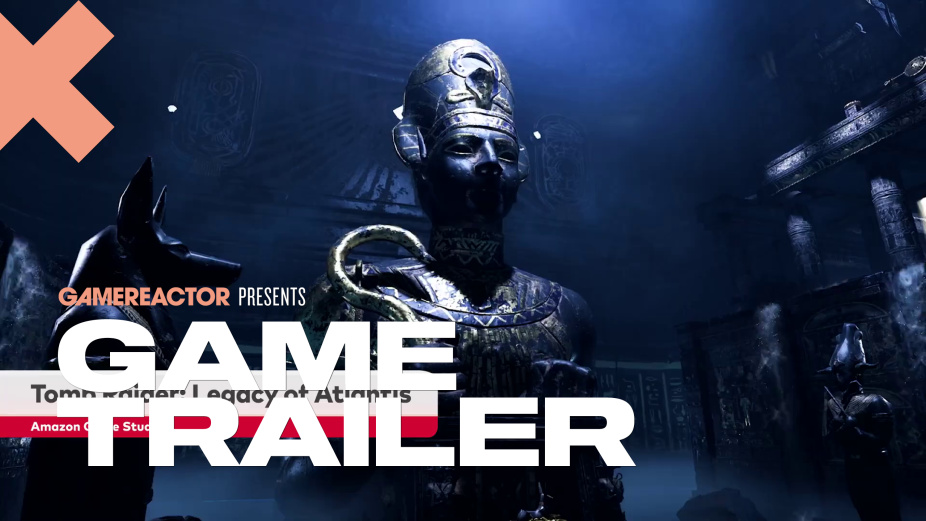
Tomb Raider: Legacy of Atlantis is clearly interested in bringing Lara Croft back to her roots, but based on what was shown at Gamescom 2026, this is not simply the original Tomb Raider rebuilt with modern graphics. Crystal Dynamics and Flying Wild Hog are taking familiar locations, puzzles and ideas from the 1996 game and expanding them with much larger environments, more elaborate traversal and plenty of modern mechanics.
The Gamescom presentation focused heavily on Greece and St. Francis’ Folly, including a redesigned version of the famous Sword of Damocles room. It was a good choice for demonstrating what Legacy of Atlantis is trying to achieve because much of the environment remains immediately recognizable, while the actual process of navigating it has changed considerably.
Platforming appears to be one of the biggest priorities. The developers have described platforming, puzzles and combat as the game’s three main pillars, and that philosophy was apparent throughout the demonstration.
Lara is considerably more agile than she was almost 30 years ago, with flips, handstands, precision jumps and other acrobatic movements forming an important part of exploration. There is still some invisible assistance helping Lara connect with platforms, although the developers insist jumps can be missed and traversal will not simply play itself.
That distinction will probably be important for longtime Tomb Raider fans. Modern Tomb Raider games gradually moved toward heavily guided traversal where climbable surfaces were usually obvious and Lara would reliably attach herself to them. Legacy of Atlantis appears to be trying to find a middle ground, keeping modern controls while asking players to pay more attention to positioning and the environment.
The Damocles room also demonstrated how dramatically the puzzles are being reworked. Rather than simply recreating the original puzzle, falling swords become part of the solution. Lara has to trigger certain traps deliberately and then use the swords themselves as platforms to reach other parts of the room. Similar changes appear throughout St. Francis’ Folly, where familiar objectives have been expanded into considerably larger environmental puzzles.
This is probably where the remake makes the strongest argument for its existence. Instead of replacing old Tomb Raider with something entirely different, Legacy of Atlantis appears to take ideas that were limited by technology in 1996 and imagine what those locations could have become with fewer restrictions.
Combat has received an equally dramatic overhaul. Lara’s dual pistols return, but encounters are far more acrobatic than simply jumping around while holding the fire button. One of the major additions is Focus, which slows time and allows Lara to continue firing during jumps and dodges.
Enemies are also being designed around the expanded environments. Some larger animals behave almost like mini-boss encounters, for example, we were showcased the famous panther and bats, using the environment and attacking from different positions rather than simply running directly toward Lara.
Levels are larger, more vertical and filled with optional areas containing relics and secrets. Relics provide historical information while also rewarding exploration with unlockables, including outfits inspired by previous Tomb Raider games. One of the more interesting additions is Lara’s archaeological scanner. It can be used to examine objects, provide historical context and potentially offer clues when players become stuck.
That feature could be useful, but it is also one of the mechanics I am most curious about. Tomb Raider has traditionally been at its best when the environment itself makes you stop, observe and understand where to go next. If scanning every room becomes the easiest solution, it could undermine some of that exploration. Thankfully, puzzle assistance appears to be optional.