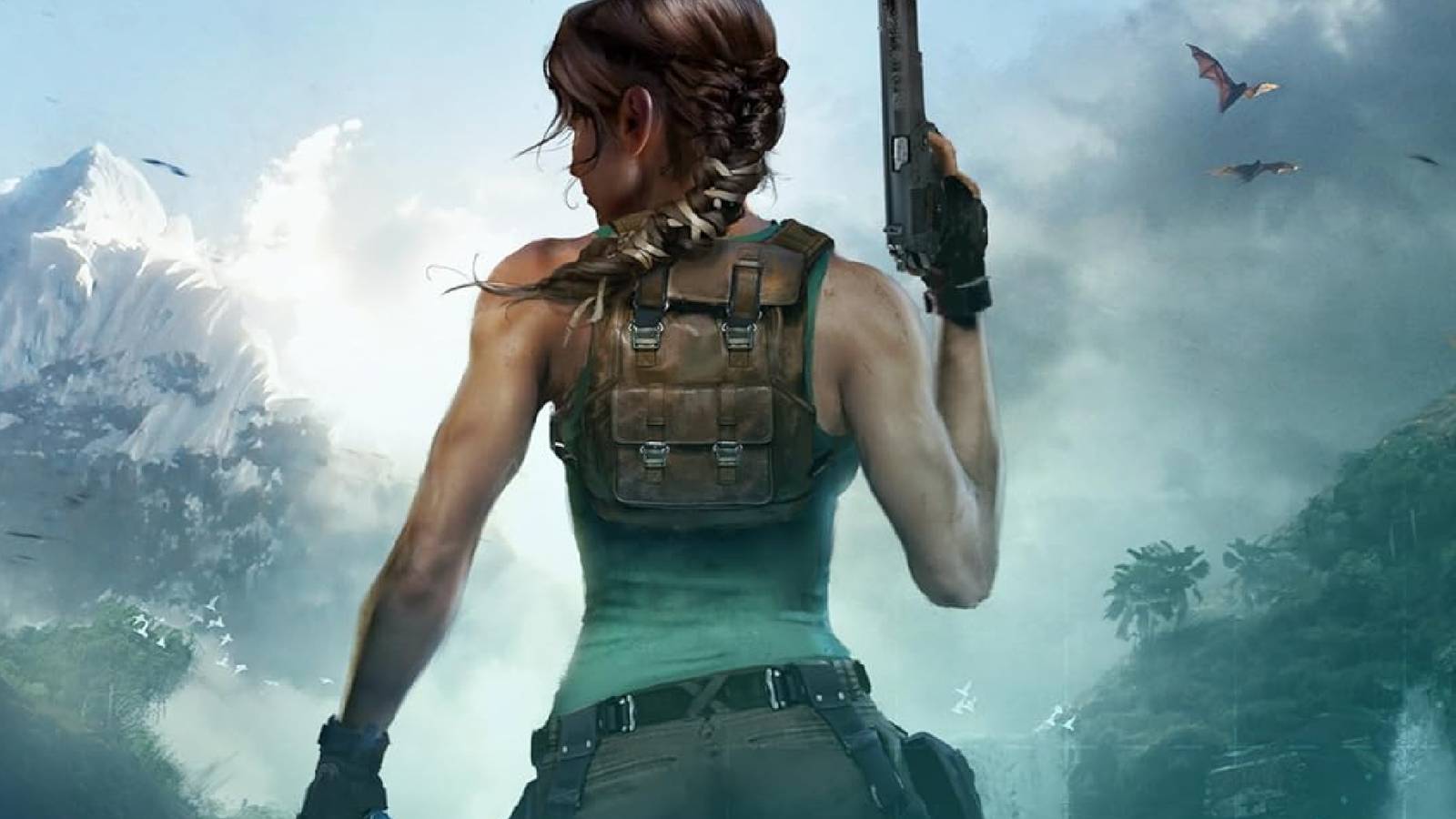
Just a couple of short years ago, it seemed like Tomb Raider, one of gaming’s most iconic series, was on the verge of living up to its own potential like never before. And now, as Lara Croft’s 30th anniversary approaches this year, that outlook has nearly inverted under the franchise’s new caretakers, leaving the heroine on some metaphorically rocky ground (instead of the literally rocky ground she so often stands on in crumbling tombs).
Tomb Raider was an early hit for Sony’s fledgling PlayStation, thanks to its boundary-pushing graphics, its balance of puzzles and combat, its charismatic protagonist… and a strong marketing campaign. A hit franchise was born virtually overnight, and sequels followed annually for the next four years. Lara’s celebrity outgrew the popularity of the games themselves, earning a feature film adaptation starring Angelina Jolie.
These first-generation games began to see diminishing returns, but were sufficient to keep most fans happy and Lara in the public eye. Perhaps PS1 owners should’ve been a little concerned when the fifth game was released as a series of cut levels from previous games, stitched together with a weak thread of narrative continuity.
The tale of this era should sound familiar: a hit first game followed by diminishing returns over multiple sequels. Crystal Dynamics’ efforts in the 2010s kept the quality up (mostly), though 2018’s Shadow of the Tomb Raider had a “weak start,” according to Square Enix, and the games slowed temporarily. A second movie came the same year, inspired by the Survivor Trilogy and starring Ex Machina‘s Alicia Vikander, which fared better at the box office than most video game movies did at the time, but didn’t fully hook critics and general audiences.
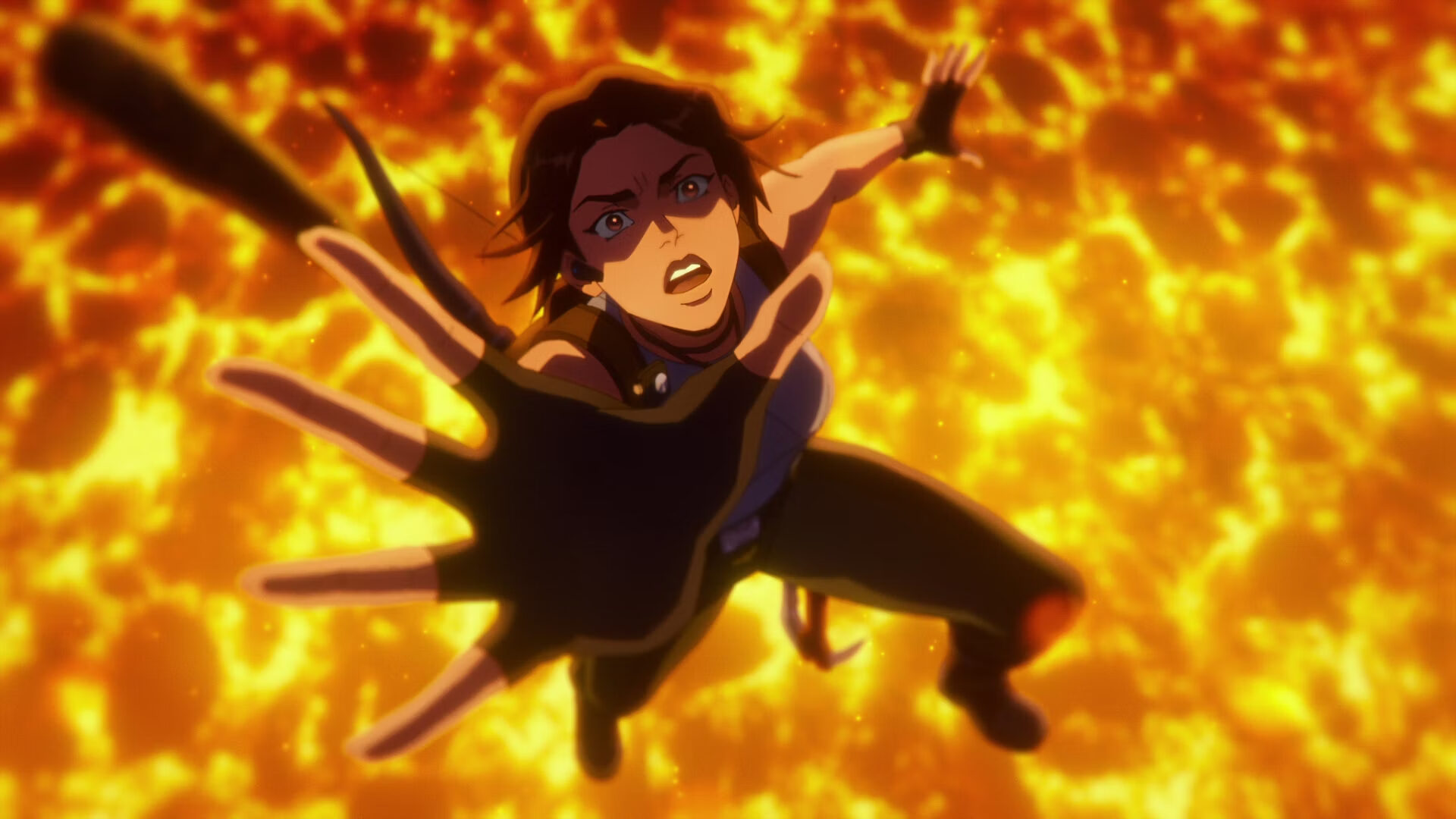
Nonetheless, it seemed Lara was poised to emerge from this brief lull stronger for the experience. A sequel to the 2018 film was postponed by the pandemic and gained HBO’s Lovecraft County‘s Misha Green as director and writer—a longtime fan of the series who seemed inspired to do right by it. Meanwhile, Netflix announced an animated series that would continue the Survivor timeline; it became Tomb Raider: The Legend of Lara Croft, starring Peggy Carter’s Hayley Atwell, who is perhaps the best-suited actress for the role ever to enter the series’ orbit.
At the 25th anniversary in 2021, Crystal Dynamics’ Will Kerslake announced that while there were no plans for a new game, they foresaw “the future of Tomb Raider in all its forms as unfolding in a time beyond these established adventures,” unifying the original and Survivor timelines, and the work of Core Design, Eidos, and Crystal Dynamics. This was fantastic news; both eras had their highs and lows, but by combining them, Crystal Dynamics could perhaps achieve the best version of Lara Croft possible.
…and then the bottom fell out. In May 2022, Square Enix jettisoned the vast majority of its non-Japanese studios, selling Crystal Dynamics and Eidos-Montréal to Embracer Group for a measly $300 million. Months later, Embracer struck a deal with Amazon Games to develop the next Tomb Raider “from the ground up.” It almost begs the question, “why did they bother buying up these studios and licenses in the first place?”
This leads us to the present-day. Embracer’s subsidiary Aspyr, acquired months prior to the Square Enix deal, has been gradually touching-up the older games for modern platforms—two remaster compilations for the first six games, and ports for the first two Survivor games, so far. Each release has been sufficient. The older games received updated control schemes which helped alleviate the original “tank” mode, which hasn’t necessarily aged well unless you have a nostalgic attachment.
Modernized controls sounded good on paper, yet in reality felt like a half-measure, especially when the janky physics weren’t improved as well.